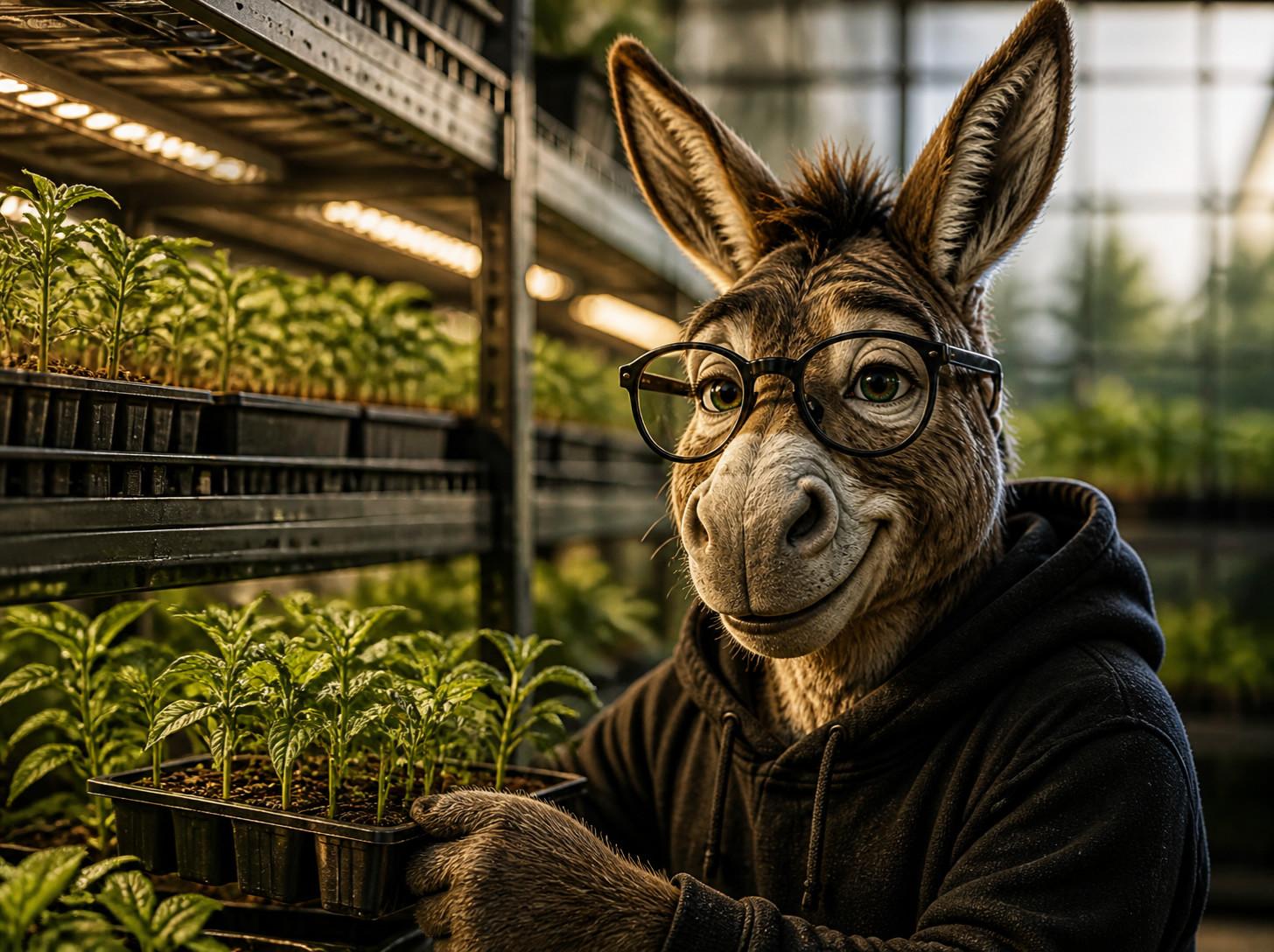
AI-run seedling nursery: the AgriAI Nursery agent
The AgriAI Nursery agent runs germination and seedlings with controlled light, temperature and humidity, measures uniformity from images and prepares transplanting.
Nursery agent
Healthy, even seedlings, from seed to transplant.
What it does
- Keeps light, temperature and humidity of germination and nursery under control
- Adjusts LED photoperiod and intensity for compact seedlings
- Counts germinated seeds and measures uniformity from images
- Runs ebb-and-flow irrigation of the plug trays
- Flags leggy seedlings, collar rot and poor germination
- Says when each batch is ready for transplanting
How it works, step by step
Sowing in plug trays, each batch logged with variety and date In the germination chamber the agent holds temperature and humidity steady Under LED lights cameras measure growth and uniformity When the batch is ready, it hands the data to the Transplant agent
Agronomic deep dive
The science behind the agent
A good seedling is worth half the harvest. A leggy seedling with poor roots, or one already flowering in the tray, carries the delay through the whole season. The nursery is where control costs least and pays most.
Germination: steady warmth and humidity
Pepper seed germinates quickly and evenly only with a warm substrate, around 25–28 °C, and humidity close to saturation. Below 20 °C germination slows and becomes uneven: seedlings emerging on different days stay different until transplanting.
That is why the germination chamber is a closed, stable space. The agent checks that substrate temperature, not just air temperature, stays in range, and counts from images how many seeds have emerged each day.
Light and temperature: compact seedlings
After emergence the enemy is stretching: warmth with little light gives tall, weak seedlings. More light, slightly cooler nights and not-too-warm days give short, sturdy stems. Toyoki Kozai showed how closed systems with artificial light produce more uniform seedlings with fewer resources.
The agent sets LED duration and intensity from the day's accumulated light and measures seedling height from images: if they grow too fast, it suggests lowering temperature or adding light.
Uniformity, grafting and transplant timing
A uniform batch can be managed as one crop; an uneven one forces compromises for months. If you graft, the healing chamber needs very high humidity and low light for a few days, and take must be logged plant by plant, as Lee, Kubota and colleagues describe.
Transplant timing is decided by development, not the calendar: roots holding the plug, true leaves developed, no open flowers. The agent signals when each batch is ready and passes the data to the Transplant agent.
The parameters that matter
| Parameter | Reference | Why it matters |
|---|---|---|
| Substrate temperature at germination | 25–28 °C | Fast, even germination |
| Germination chamber humidity | Close to saturation (above 90%) | Keeps seed from drying out during emergence |
| Seedling solution EC | Low, about 1.0–1.5 mS/cm | Young roots are salt-sensitive |
| Flowers at transplant | No open flowers | A seedling already flowering starts late |
Reference values from the agronomic literature for soilless greenhouse vegetables: always calibrate them to crop, variety, stage and local climate.
The sensors it uses
What each one measures, where it goes and the detail that makes the difference. “Core” is needed to start, “Extra” adds precision. See the full list for all agents
- Air temperature and humidity (aspirated box)CoreTemperature and relative humidity; VPD and dew point are worked out from themAt canopy height, in a shielded, aspirated box, at least one per compartmentWithout a shield and fan, sunlight can throw the reading off by several degrees.
- PAR light sensorCoreLight useful for photosynthesis in µmol/m²/s and the daily totalAbove the crop, level and unshadedAccumulated light drives irrigation, CO₂ dosing and the growth estimate.
- Fixed or trolley-mounted camerasCoreImages of the plants to spot symptoms and count flowers and fruitsOn a trolley running on the heating pipes, or at fixed pointsImages taken from the same spot at the same time are the easiest to compare.
- Germination chamber sensorsCoreSubstrate temperature in the trays, air temperature and humidityInside sample trays and at bench heightSubstrate temperature is what counts, not air: that is where the seed germinates.
- Root-zone temperatureExtraTemperature of the solution and the substrateIn the slab and in the solution tankRoots that are too cold or too hot take up water and nutrients poorly.
The most common mistakes
- Keeping the nursery warm with little light: leggy, weak seedlings
- Overwatering trays: collar rot and oxygen-starved roots
- Not logging seed batch and date: traceability is lost from day one
- Transplanting by calendar instead of development
The nursery is where uniformity is built: a day of control here saves weeks of corrections in the greenhouse.
Studies and sources
The scientific research and trade press we build on. Links go to the original sources.
Scientific research
- Plant factory as a resource-efficient closed plant production systemPlant Factory (Elsevier), T. Kozai, G. Niu · 2020Toyoki Kozai and Genhua Niu on closed systems with artificial light: more control and fewer resources to grow seedlings.
- Closed Transplant Production System at Chiba UniversityTransplant Production in the 21st Century (Springer), C. Chun, T. Kozai · 2000The closed seedling system developed in Japan, a model for artificial-light nurseries.
- Current status of vegetable grafting: Diffusion, grafting techniques, automationScientia Horticulturae, J.-M. Lee, C. Kubota et al. · 2010Spread of vegetable grafting, techniques and machines to automate it.
Frequently asked questions
Is a closed growth chamber needed?
Not necessarily: the agent also works with a greenhouse nursery. A closed space with LED lights gives more control and more even seedlings, as Toyoki Kozai's work on closed systems shows.
Does it handle grafting too?
Yes, as a protocol stage: it logs rootstocks and take, and controls the healing chamber climate. Grafting itself stays manual or done by dedicated machines.
The other AgriAI agents
 Transplant agentEvery seedling in the right place, at the right time.
 Fertigation agentThe right water and nutrients, at the right time.
 Climate agentThe greenhouse always in the ideal climate, with less energy.
 Crop protection agentSpots problems before they become damage.
 Harvest agentOnly ripe fruit, picked without damage.
 Quality agentEvery fruit in the right grade.
 Packing agentCorrect, traceable packs, from greenhouse to shelf.
 Yield forecasting agentKnow how much you'll harvest, when, and at what cost.
Become a pilot farm
Free digital check-up: we look at systems, consumption and problems and tell you whether and where AgriAI can help.