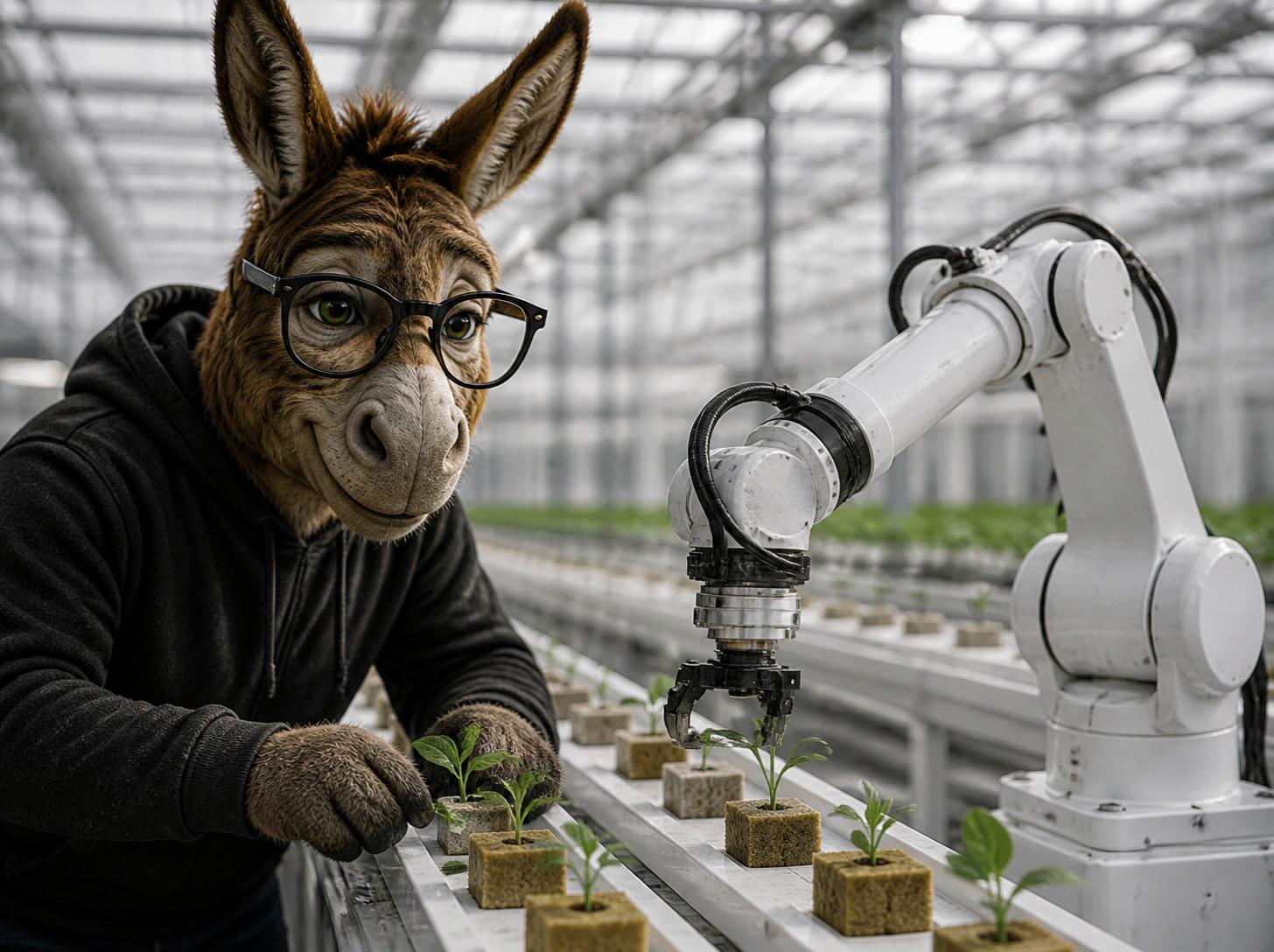
AI-guided robotic transplanting: the AgriAI Transplant agent
The AgriAI Transplant agent picks the right moment, selects seedlings from images and guides robotic transplanting into soilless systems, logging every plant.
Transplant agent
Every seedling in the right place, at the right time.
What it does
- Picks the transplant day from seedling development and weather
- Selects the best seedlings from images and discards weak ones
- Guides the robot or transplanter placing them into blocks and slabs
- Checks the position and depth of every seedling after planting
- Sets up establishment irrigation with the Fertigation agent
- Logs seed batch and position of every plant for traceability
How it works, step by step
Receives ready batches and their quality from the Nursery Chooses a day with suitable weather and greenhouse climate The robot picks the best seedlings and sets them in the substrate A camera checks every position and starts establishment irrigation
Agronomic deep dive
The science behind the agent
Transplanting is a stress: the seedling loses some roots, changes environment and must establish quickly. Doing it at the right moment, with the right seedlings and a ready substrate, decides how soon the crop really gets going.
Choosing the seedlings and the day
Only healthy, similar seedlings are transplanted; the weakest are discarded, because in the greenhouse they would lag behind. The ideal day avoids extreme heat and light: a fresh transplant transpires but still takes up little.
The agent scores each seedling from nursery images, height, colour and leaf count, and proposes the day based on the forecast and expected greenhouse climate.
Establishment: the first 72 hours
The block or slab must be pre-soaked and at the right temperature, around 20 °C or a little more, before the seedling arrives. In the first days air humidity is kept higher and shade is used in strong sun, to cut water loss.
The Transplant agent hands Fertigation and Climate an establishment protocol: short cycles, moderate EC, higher humidity. After a few days images show whether the plants have resumed growth.
Robotics and vision: where we stand
Automatic tray transplanters and grafting machines have existed for years, as Lee, Kubota and colleagues document. Bechar and Vigneault show the hard part isn't the arm, but seeing the plant well and adapting to its variability.
That is why the agent focuses on vision: selecting seedlings, checking the position and depth of each transplant and logging each plant's position, the first link of traceability in the greenhouse.
The parameters that matter
| Parameter | Reference | Why it matters |
|---|---|---|
| Substrate temperature at establishment | About 20–22 °C | Roots active straight away |
| Substrate at transplant | Already soaked and drained | Immediate contact between plug and substrate |
| Batch uniformity | Discard off-size seedlings | A uniform crop is easier to manage |
| Climate in the first days | Higher humidity, shade in strong sun | Less water loss until roots restart |
Reference values from the agronomic literature for soilless greenhouse vegetables: always calibrate them to crop, variety, stage and local climate.
The sensors it uses
What each one measures, where it goes and the detail that makes the difference. “Core” is needed to start, “Extra” adds precision. See the full list for all agents
- Weather forecastCoreExpected temperature, radiation and rain over the coming daysAn online data service: nothing to installThey let you act ahead instead of chasing, for example heating less before a sunny day.
- Fixed or trolley-mounted camerasCoreImages of the plants to spot symptoms and count flowers and fruitsOn a trolley running on the heating pipes, or at fixed pointsImages taken from the same spot at the same time are the easiest to compare.
- Field photos and notes (smartphone)CoreObservations by the people working in the greenhouse: symptoms, fruit counts, crop stagesFrom the AgriAI app, during the greenhouse walkThe grower's eye is still the most valuable sensor: the app turns it into data.
- Depth camera (RGB-D)CoreColour image plus the distance of every point: 3D position of seedlings, fruit and stemsOn the robot arm or the trolleyWithout depth the robot knows there is a fruit, but not where to cut.
- Root-zone temperatureExtraTemperature of the solution and the substrateIn the slab and in the solution tankRoots that are too cold or too hot take up water and nutrients poorly.
- Gripper force sensorExtraHow much force the gripper applies to seedling or fruitIn the robot gripper's fingersKeeps the grip below the level that bruises fruit or crushes stems.
The most common mistakes
- Transplanting into dry or cold substrate
- Burying the collar too deep: risk of rot
- Using every seedling, even the weakest
- Transplanting on a hot, bright day without protection
A successful transplant doesn't show on the day, but three days later: when all the plants restart together.
Studies and sources
The scientific research and trade press we build on. Links go to the original sources.
Scientific research
- Current status of vegetable grafting: Diffusion, grafting techniques, automationScientia Horticulturae, J.-M. Lee, C. Kubota et al. · 2010Includes the state of automation for grafting and seedling handling.
- Agricultural robots for field operations: Concepts and componentsBiosystems Engineering, A. Bechar, C. Vigneault · 2016Components and limits of agricultural robots: perceiving the plant is the hardest part.
Frequently asked questions
Does the transplanting robot exist yet?
Automatic tray transplanters have been on the market for years; the agent's vision and guidance part is in design and will be tested at the Farm Tech with robotics partners.
Does it work without a robot?
Yes: in that case the agent prepares the transplant plan for the crew and checks the work from photos.
The other AgriAI agents
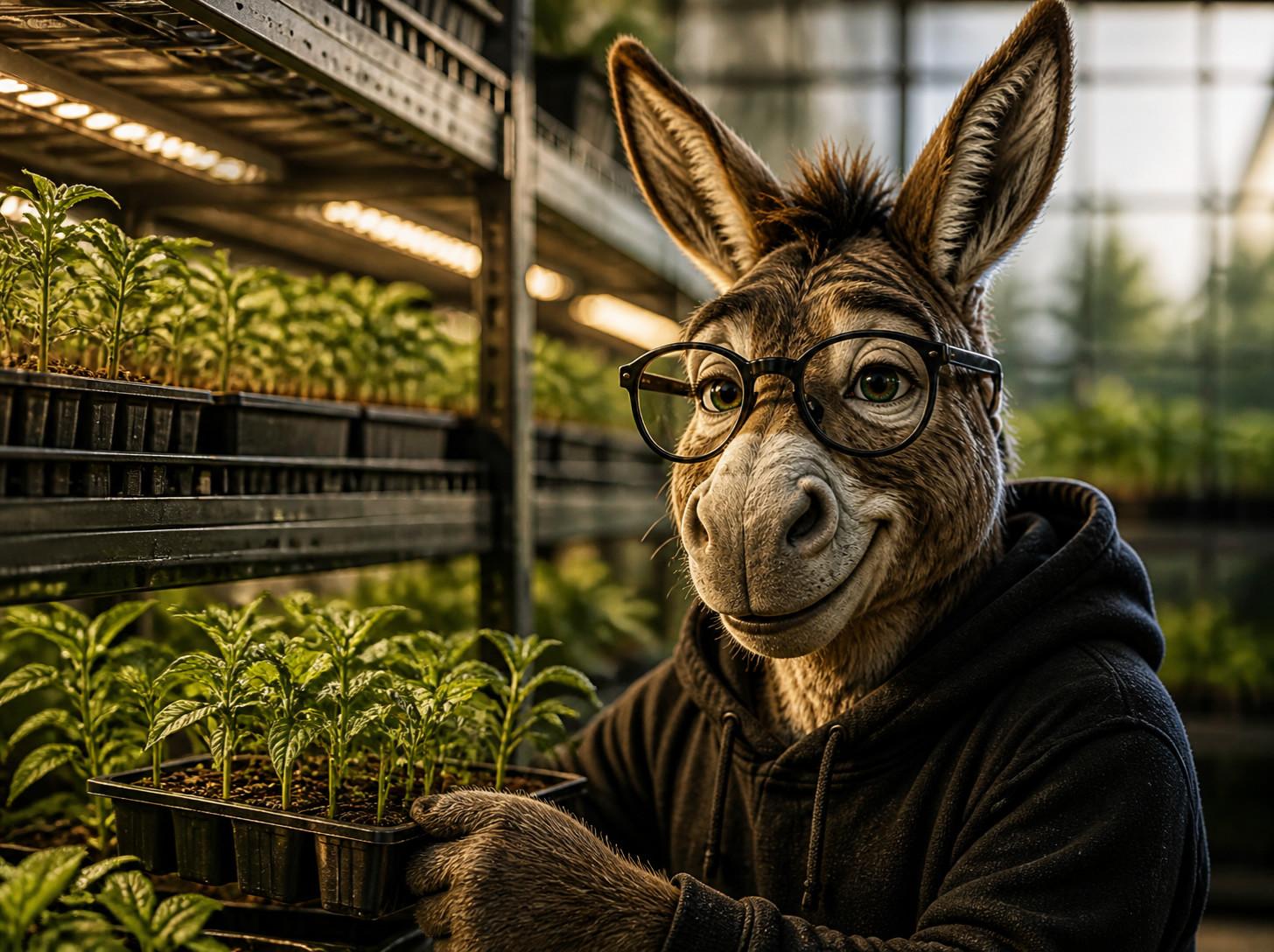 Nursery agentHealthy, even seedlings, from seed to transplant.
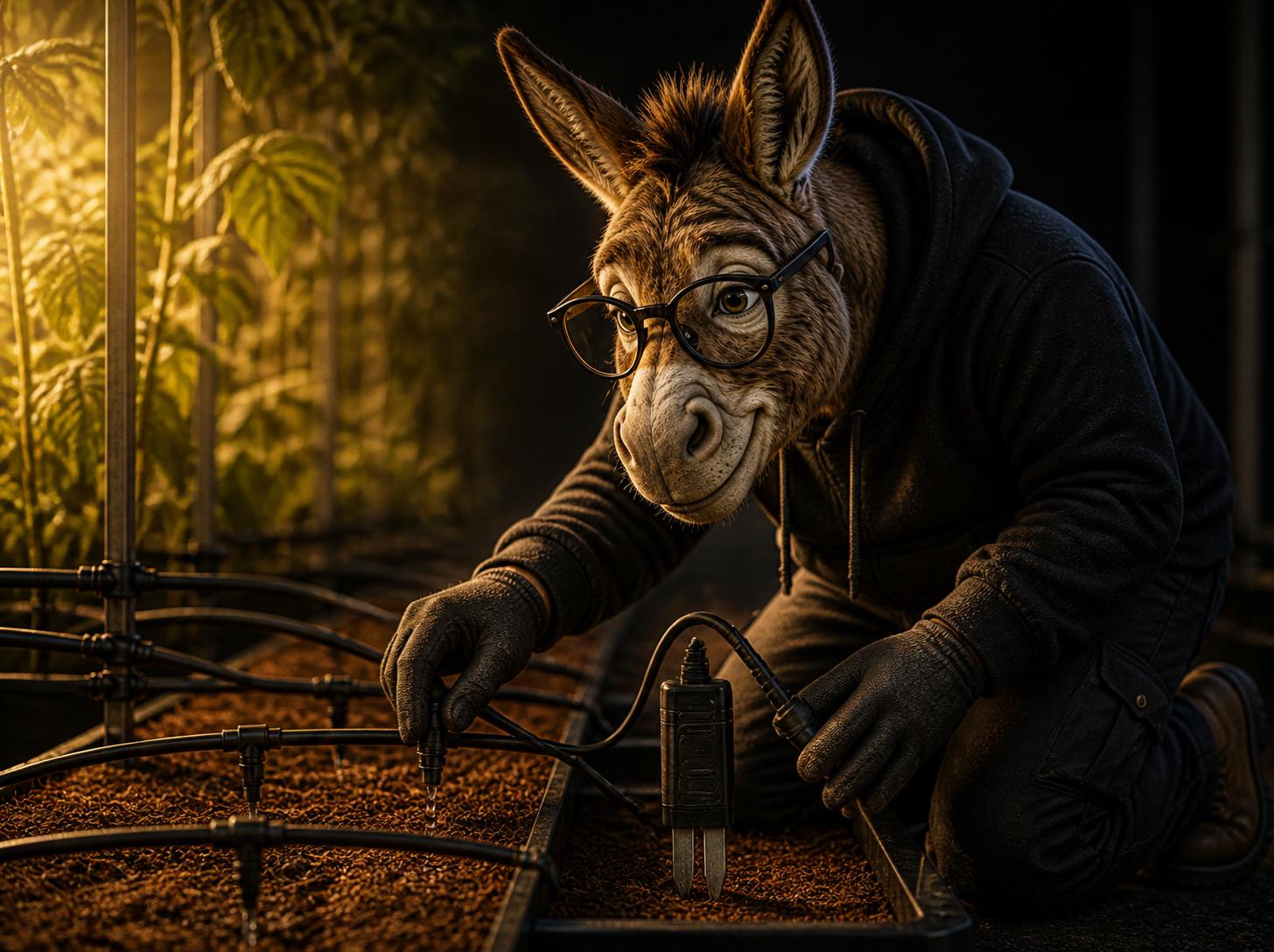 Fertigation agentThe right water and nutrients, at the right time.
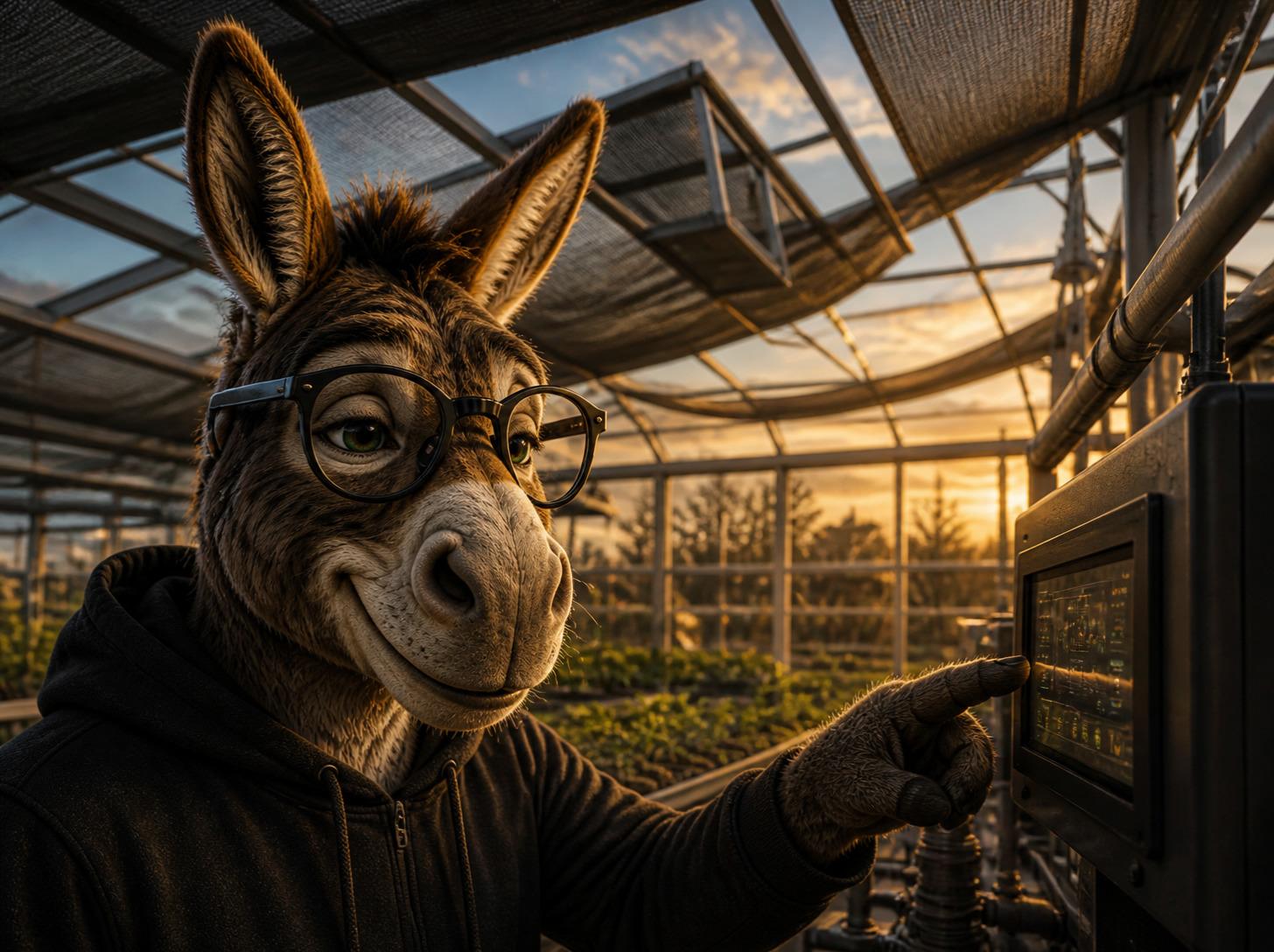 Climate agentThe greenhouse always in the ideal climate, with less energy.
 Crop protection agentSpots problems before they become damage.
 Harvest agentOnly ripe fruit, picked without damage.
 Quality agentEvery fruit in the right grade.
 Packing agentCorrect, traceable packs, from greenhouse to shelf.
 Yield forecasting agentKnow how much you'll harvest, when, and at what cost.
Become a pilot farm
Free digital check-up: we look at systems, consumption and problems and tell you whether and where AgriAI can help.