AI greenhouse climate control: the AgriAI Climate agent
Smart greenhouse: the AgriAI Climate agent manages ventilation, shading and heating from sensors and the forecast, to use less energy.
Climate agent
The greenhouse always in the ideal climate, with less energy.
What it does
- Monitors temperature, humidity, CO₂ and light
- Opens and closes vents, shade screens and fans
- Anticipates heat and cold using the forecast
- Prevents condensation and humidity that favor disease
- Shifts consumption to the hours when solar is producing
- Instant alarm for frost, extreme heat or faults
How it works, step by step
Indoor sensors measure temperature, humidity, CO₂ and light 
The agent checks the next hours' forecast and solar production 
It adjusts vents, screens and ventilation ahead of time, within limits 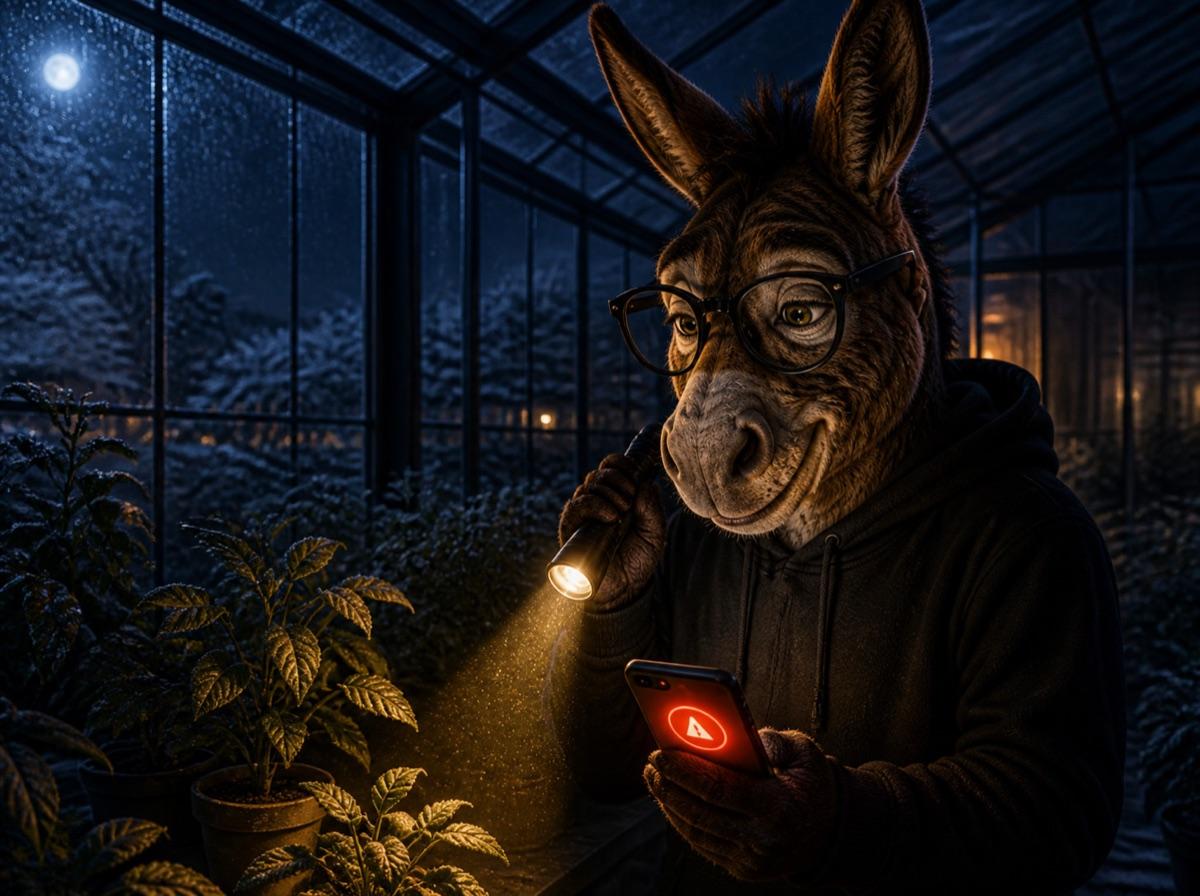
For frost, extreme heat or faults it alerts you immediately
Agronomic deep dive
The science behind the agent
A greenhouse climate is not run by a single number. Temperature, humidity, light and CO₂ act together on photosynthesis, transpiration and disease, and every action shifts more than one: opening vents cools, but also removes CO₂ and humidity.
Vapor pressure deficit (VPD)
VPD matters more than relative humidity: the difference between the vapor the air could hold and what it actually holds. It is the "pull" that makes the plant transpire. With VPD too low the plant transpires little, takes up less calcium and leaves stay wet, ideal ground for mold; with VPD too high it closes its stomata and stops growing.
Temperature and light go together
The ideal temperature is not fixed: with plenty of light the plant can use higher temperatures, while in low light high temperatures burn sugars without producing. That is why growers think in terms of 24-hour average temperature and day-night difference, not the instant value.
How the agent reasons
The agent works ahead: it checks the next hours' forecast, radiation and solar output, and picks the strategy that keeps VPD and average temperature in range with the least energy. It never overrides the controller: it gives it better setpoints, and leaves the safety protections against frost, wind and overheating to it.
Strategies to use less energy
The first lever is night thermal screens, which hold heat in like a blanket. The second is temperature integration: instead of chasing a fixed value hour by hour, you accept some cooler hours and make up for them with warmer hours when the sun heats for free, while respecting the daily average the plant needs.
A costly mistake is heating and venting at the same time to remove humidity. Often a small vent opening at the right moment is enough, or dedicated dehumidification systems. Every day the agent assesses which combination gives the plant the same result with less energy, and with solar it shifts consumption to production hours.
Reliable sensors
Temperature and humidity are measured in a shielded, ventilated box at crop height in the middle of the compartment: a sensor in the sun or near heating pipes measures itself. Outside you need a weather station with radiation, wind and rain, because wind and rain decide when vents must close for safety.
Light, shading and sunscald
In summer shade screens lower temperature but also take away light, that is production: close them only as much as needed and at critical hours. Pepper is sensitive to sunscald on exposed fruit, so shading during radiation peaks protects marketable quality as well as the plant.
How it works with the other agents
The VPD the Climate agent maintains decides how much water the plant drinks, and so the Fertigation agent's work. Night humidity is the first risk indicator for the Crop protection agent. Average temperatures feed the Forecasting agent's degree days: a stable climate also makes the forecast more reliable.
The parameters that matter
| Parameter | Reference | Why it matters |
|---|---|---|
| VPD | For many greenhouse vegetables about 0.8–1.2 kPa in daylight | Balance between transpiration, calcium uptake and disease risk |
| 24-hour average temperature | For pepper roughly 21–23 °C, adjusted to light and stage | Sets the growth rate and the leaf-fruit balance |
| CO₂ | With a closed greenhouse and strong light it is often enriched toward 600–800 ppm | It is the raw material of photosynthesis; with open vents enrichment is lost |
| Light (daily radiation) | Measured as a daily sum, not an instant value | Determines how much temperature and water the plant can use |
Reference values from the agronomic literature for soilless greenhouse vegetables: always calibrate them to crop, variety, stage and local climate.
The sensors it uses
What each one measures, where it goes and the detail that makes the difference. “Core” is needed to start, “Extra” adds precision. See the full list for all agents
- Air temperature and humidity (aspirated box)CoreTemperature and relative humidity; VPD and dew point are worked out from themAt canopy height, in a shielded, aspirated box, at least one per compartmentWithout a shield and fan, sunlight can throw the reading off by several degrees.
- CO₂ sensor (NDIR infrared)CoreCarbon dioxide concentration in ppmIn the middle of the crop, away from doors and burnersCheck it regularly against outside air or a reference gas.
- PAR light sensorCoreLight useful for photosynthesis in µmol/m²/s and the daily totalAbove the crop, level and unshadedAccumulated light drives irrigation, CO₂ dosing and the growth estimate.
- Vent, screen and heating statusCoreVent opening, screen position, valves and boiler on or offRead from the climate controller you already haveThe agent needs to know what the greenhouse is already doing before suggesting anything.
- Weather stationCoreTemperature, humidity, solar radiation, wind and rain outside the greenhouseOn top of or next to the greenhouse, clear of obstaclesWind and rain also matter for safety: closing vents before a storm.
- Weather forecastCoreExpected temperature, radiation and rain over the coming daysAn online data service: nothing to installThey let you act ahead instead of chasing, for example heating less before a sunny day.
- Gutter scale (load cell)ExtraWeight of substrate and plants: water used and transpiration minute by minuteUnder a gutter with representative plantsIt is the most direct measure of water use and also shows plant growth over time.
- Root-zone temperatureExtraTemperature of the solution and the substrateIn the slab and in the solution tankRoots that are too cold or too hot take up water and nutrients poorly.
- Infrared leaf thermometerExtraLeaf temperature, without contactAimed at the canopy, from above or the sideLeaves warmer than the air point to plants transpiring little: possible water stress.
- Leaf wetness sensorExtraWhether leaves are wet, and for how many hoursIn the canopy, where condensation forms firstHours of wetness are among the main indicators of botrytis and other fungal risk.
- Energy and gas metersExtraHeating and pump use, solar productionOn the switchboard, the boiler and the inverterThey let you measure real savings, not just estimate them.
- Multispectral or thermal cameraExtraLight reflected beyond the visible range and canopy heat, to see stress before symptomsOn a trolley, at a fixed point or, in open fields, on a droneIt costs more: we add it only where an ordinary camera isn't enough.
The most common mistakes
- Looking at relative humidity instead of VPD
- Reacting to heat once it has arrived instead of anticipating it with the forecast
- Sensors in direct sun or next to the heater: they measure the sensor, not the greenhouse
- Enriching CO₂ with the vents open
A good climate is built ahead of time and read in VPD and daily averages. The agent does exactly that, leaving the controller in its role as safety guard.
Studies and sources
The scientific research and trade press we build on. Links go to the original sources.
From the trade press
- WUR researchers grow cucumbers using artificial intelligenceHortiDailyWageningen grows cucumbers with a digital twin and a reinforcement-learning controller.
- Validation trial confirms the feasibility of autonomous control in greenhousesHortiDailyA Dutch trial on the feasibility of autonomous greenhouse climate control.
Frequently asked questions
25 questions, two answers each: the agronomist's and the developer's. When we cite an author, the link goes to the original work.
What is VPD and why does the agent use it?
The agronomist
Vapour pressure deficit measures how strongly the air "pulls" water from the leaves. Between about 0.8 and 1.2 kPa the plant transpires well without stress; below it disease risk rises, above it the plant closes its stomata.
Hamlyn G. Jones, Plants and Microclimate, Cambridge University Press, 2013The developer
VPD isn't measured: it is calculated from temperature and humidity with standard formulas. So the agent first checks the quality of those two inputs: one degree of error in temperature shifts the result a lot.
What temperature does pepper need?
The agronomist
What matters most is the 24-hour average, often around 21–23 °C. Temperature steers the balance between plant growth and fruit set: cooler nights and warmer days push in different directions.
Cecilia Stanghellini, Bert van 't Ooster, Ep Heuvelink, Greenhouse Horticulture: Technology for Optimal Crop Production, Wageningen Academic Publishers, 2019The developer
So the agent doesn't work on fixed hourly values but on a moving average: if one night the greenhouse stays cooler, the deficit is made up over the following days, within limits you set.
What is temperature integration?
The agronomist
Plants respond to the average temperature over several days, within limits. So you can let the greenhouse run cooler when heating is expensive and catch up with free sunshine, without losing yield.
Cecilia Stanghellini, Bert van 't Ooster, Ep Heuvelink, Greenhouse Horticulture: Technology for Optimal Crop Production, Wageningen Academic Publishers, 2019The developer
Technically it is a control problem over a multi-day horizon using weather forecasts, known as model predictive control: you pick the cheapest sequence of actions that respects the crop's constraints.
Karl Johan Åström, Richard M. Murray, Feedback Systems: An Introduction for Scientists and Engineers, Princeton University PressWhy not heat and ventilate at the same time?
The agronomist
Sometimes it's needed, to remove humidity. But often it's energy going literally out of the window: it happens when the heating and venting setpoints are too close together.
Cecilia Stanghellini, Bert van 't Ooster, Ep Heuvelink, Greenhouse Horticulture: Technology for Optimal Crop Production, Wageningen Academic Publishers, 2019The developer
The agent checks for conflicts between actuators: if heating and vents are active together without a humidity reason, it flags it and estimates how much energy is being lost, from the meter data.
How much CO₂, and when?
The agronomist
With vents closed and good light growers often work at 600–800 ppm. With vents open CO₂ escapes at once and the benefit collapses: the gain always depends on how much light the plant can use.
Jan Goudriaan, H. H. van Laar, Modelling Potential Crop Growth Processes, Kluwer, 1994The developer
The agent sets dosing from vent opening, light and the cost of CO₂: a cost-benefit calculation redone every few minutes, not a fixed threshold.
How does it prevent condensation and disease?
The agronomist
Fungal infections such as botrytis start when water stays on the leaves. The leaf must not cool below dew point, especially at dawn and on clear nights.
George N. Agrios, Plant Pathology, Elsevier, 5th ed., 2005The developer
The agent calculates dew point and estimates leaf temperature, so it spots risky hours in advance and raises the temperature slightly or ventilates before condensation forms.
When should thermal screens close?
The agronomist
At night they greatly reduce heat loss. They must open gradually in the morning, because cold air trapped above the screen can drop onto the plants and condensation can drip.
Cecilia Stanghellini, Bert van 't Ooster, Ep Heuvelink, Greenhouse Horticulture: Technology for Optimal Crop Production, Wageningen Academic Publishers, 2019The developer
Opening follows a ramp in small steps, with a minimum gap between open and close points to avoid constant movement. Engineers call it hysteresis, and it protects the motors too.
Karl Johan Åström, Richard M. Murray, Feedback Systems: An Introduction for Scientists and Engineers, Princeton University PressHow does it use the weather forecast?
The agronomist
To act ahead instead of chasing: if tomorrow is sunny you can heat less tonight, if cold is coming you close the screen earlier. An experienced grower does it by eye; the agent does it every hour.
The developer
Forecasts are uncertain, so the agent works on several scenarios and picks decisions that hold up in nearly all of them. Combining several models to estimate uncertainty is a technique also studied at DeepMind.
Balaji Lakshminarayanan, Alexander Pritzel, Charles Blundell (DeepMind), Simple and Scalable Predictive Uncertainty Estimation using Deep Ensembles, NeurIPS, 2017Does it replace the climate controller?
The agronomist
No. The controller stays and keeps doing what it does well: holding the greenhouse at the set values, minute by minute.
The developer
It is a two-level architecture: the controller runs the fast control loops, the agent decides the setpoints over hours and days. The upper level suggests, the lower level protects.
Karl Johan Åström, Richard M. Murray, Feedback Systems: An Introduction for Scientists and Engineers, Princeton University PressWhat happens in strong wind or a storm?
The agronomist
The structure comes first: vents closed in strong wind or rain, whatever the temperature and humidity. A damaged greenhouse costs more than any lost season.
The developer
The controller's safety rules always take priority over the agent and are never delegated to AI. If the agent and safety conflict, safety wins.
Ross Anderson, Security Engineering, Wiley, 3rd ed., 2020Can AI really grow a crop on its own?
The agronomist
In Wageningen's Autonomous Greenhouse Challenge, international teams ran climate, irrigation and crop remotely with algorithms, and results were compared with those of expert growers. It is serious evidence that it can be done, under controlled conditions.
Silke Hemming et al. (Wageningen), Remote Control of Greenhouse Vegetable Production with Artificial Intelligence, Sensors, 2019The developer
For us "on its own" means: it decides the routine and asks about everything else. An autonomous system in production must know when it isn't sure and hand over to a person.
European Union, Artificial Intelligence Act (EU) 2024/1689, EUR-LexDo you use reinforcement learning?
The agronomist
Every wrong attempt on real plants can cost a harvest. In farming you experiment carefully: small first, then large.
The developer
Reinforcement learning, as described by Sutton and Barto, learns from trial and reward. That is why we train it on a greenhouse simulator and bring it into the field only within tight limits and with constant comparison.
Richard S. Sutton, Andrew G. Barto, Reinforcement Learning: An Introduction, MIT Press, 2nd ed., 2018What is a greenhouse digital twin?
The agronomist
It is a model that simulates climate and crop growth. Crop models come from the Dutch school of C. T. de Wit and Jan Goudriaan, who described photosynthesis and growth in equations.
Jan Goudriaan, H. H. van Laar, Modelling Potential Crop Growth Processes, Kluwer, 1994The developer
The twin is constantly updated with real data, so it doesn't drift from reality. The technique for merging model and measurements is that of the Kalman filter, used since the Apollo missions.
Rudolf E. Kálmán, A New Approach to Linear Filtering and Prediction Problems, Journal of Basic Engineering, 1960Where should climate sensors go?
The agronomist
At canopy height, inside a shielded, aspirated box, at least one per compartment. A sensor in the sun or near a hot pipe measures its own spot, not the greenhouse.
Cecilia Stanghellini, Bert van 't Ooster, Ep Heuvelink, Greenhouse Horticulture: Technology for Optimal Crop Production, Wageningen Academic Publishers, 2019The developer
With two sensors per zone the agent compares readings: if they diverge too much, one has a problem. Redundancy is cheap and prevents many wrong decisions.
How much energy is saved?
The agronomist
It depends on the greenhouse and the local climate. The main levers are screens, temperature integration and use of forecasts.
Cecilia Stanghellini, Bert van 't Ooster, Ep Heuvelink, Greenhouse Horticulture: Technology for Optimal Crop Production, Wageningen Academic Publishers, 2019The developer
We measure with meters and compare against a weather-corrected baseline: a mild winter mustn't look like the agent's savings. Without degree-day correction, the comparison isn't honest.
Rob J. Hyndman, George Athanasopoulos, Forecasting: Principles and Practice, OTexts, 3rd ed., 2021Solar panels on the greenhouse: worth it?
The agronomist
Every shadow takes light away, and the yield of many crops grows in proportion to intercepted light, as John Monteith showed. You need to weigh lost yield against energy gained.
John L. Monteith, Climate and the efficiency of crop production in Britain, Philosophical Transactions of the Royal Society B, 1977The developer
If there is solar, the agent shifts flexible loads such as pumps and dehumidification to hours when the panels produce. It is a load-scheduling problem, solved daily with forecasts.
How does it handle high humidity in winter?
The agronomist
With a small vent opening plus minimum heating, or with dehumidifiers. Each method has a different cost, and leaving humidity high costs you in disease.
Cecilia Stanghellini, Bert van 't Ooster, Ep Heuvelink, Greenhouse Horticulture: Technology for Optimal Crop Production, Wageningen Academic Publishers, 2019The developer
The agent compares the energy cost of each method per gram of water removed from the air and picks the cheapest at that moment, taking into account the disease risk worked out by the Crop protection agent.
How does it protect fruit from sunscald?
The agronomist
Pepper suffers sunscald when exposed fruit overheats. You shade under excessive radiation, but every shade costs growth: it needs the right moment, not permanent shade.
Hamlyn G. Jones, Plants and Microclimate, Cambridge University Press, 2013The developer
Shading triggers on radiation and estimated fruit temperature, with a closing threshold different from the opening one, so the screen doesn't keep moving as clouds pass.
Karl Johan Åström, Richard M. Murray, Feedback Systems: An Introduction for Scientists and Engineers, Princeton University PressIs the climate the same everywhere in the greenhouse?
The agronomist
No: there are differences between edges and centre, top and bottom, near doors and vents. Plants in different spots grow differently.
Cecilia Stanghellini, Bert van 't Ooster, Ep Heuvelink, Greenhouse Horticulture: Technology for Optimal Crop Production, Wageningen Academic Publishers, 2019The developer
With several measuring points the agent builds a climate map and works by zone. Persistent differences become useful flags, for example a heating pipe that isn't warming.
What does the agent do at dawn?
The agronomist
Dawn is the most delicate moment: leaves are cold, the air warms quickly and condensation forms. You raise the temperature a little before sunrise.
George N. Agrios, Plant Pathology, Elsevier, 5th ed., 2005The developer
Knowing sunrise time and the forecast, the agent plans a temperature ramp that starts ahead of time, instead of reacting once condensation is already there.
Can I take over manually?
The agronomist
Always. The person in the greenhouse sees things sensors don't, and must be able to decide without asking software for permission.
The developer
Manual action takes priority and is logged with the reason, if you give one. It is the human oversight required by the EU AI Act, and those reasons help improve the rules.
European Union, Artificial Intelligence Act (EU) 2024/1689, EUR-LexIs a connected greenhouse safe from cyber attacks?
The agronomist
An attack that opens vents on a freezing night can cost a whole harvest. Cyber security in a greenhouse is an agronomic issue, not just a technical one.
The developer
The greenhouse should be treated as an industrial plant: separate network, strong authentication, no direct commands from the internet and safety limits written into the controller. Ross Anderson made it a principle: design with the attacker in mind.
Ross Anderson, Security Engineering, Wiley, 3rd ed., 2020Does it explain why it made a decision?
The agronomist
An agronomist won't apply advice they don't understand. The explanation must speak the crop's language: light, humidity, disease risk.
The developer
Every decision shows the factors that weighed most. For learned models we use attribution methods such as SHAP, which shows how much each input moved the result.
Scott M. Lundberg, Su-In Lee, A Unified Approach to Interpreting Model Predictions (SHAP), NeurIPS, 2017Does it work on plastic or older greenhouses?
The agronomist
Yes, with fewer levers: without screens or heating you mainly manage ventilation and shading. The benefit is smaller, but that is often where mistakes cost most.
The developer
The plant model adapts to the available actuators: you configure what is there and what isn't, and the agent only proposes actions the greenhouse can actually carry out.
How is the climate agent's success measured?
The agronomist
With yield and quality per square metre, hours at risky humidity and gas or electricity use per kilo produced.
The developer
These indicators are calculated automatically and compared with previous years, adjusted for weather. Forecasts and comparisons follow Hyndman and Athanasopoulos's methods.
Rob J. Hyndman, George Athanasopoulos, Forecasting: Principles and Practice, OTexts, 3rd ed., 2021The other AgriAI agents
 Nursery agentHealthy, even seedlings, from seed to transplant.
 Transplant agentEvery seedling in the right place, at the right time.
 Fertigation agentThe right water and nutrients, at the right time.
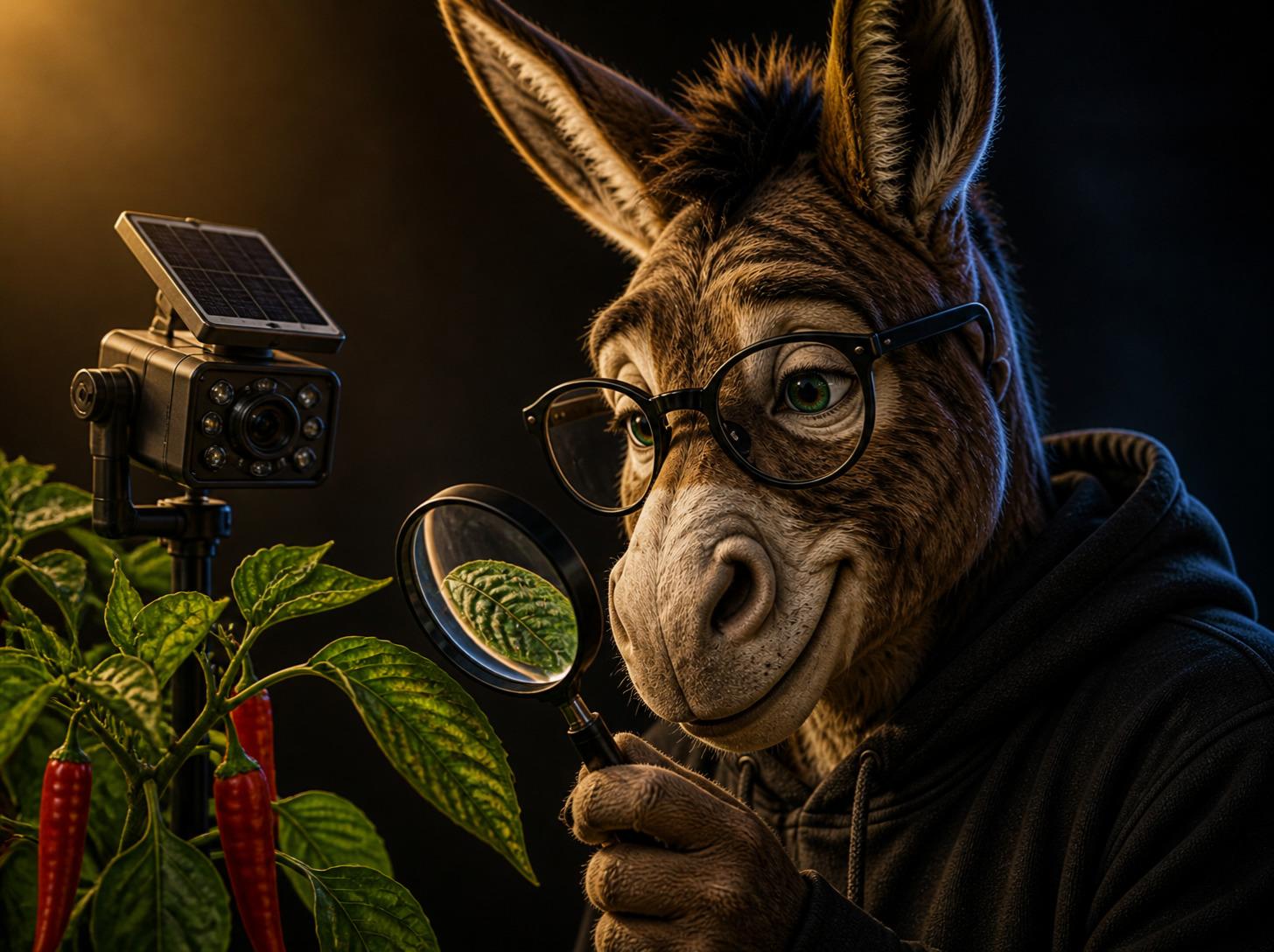 Crop protection agentSpots problems before they become damage.
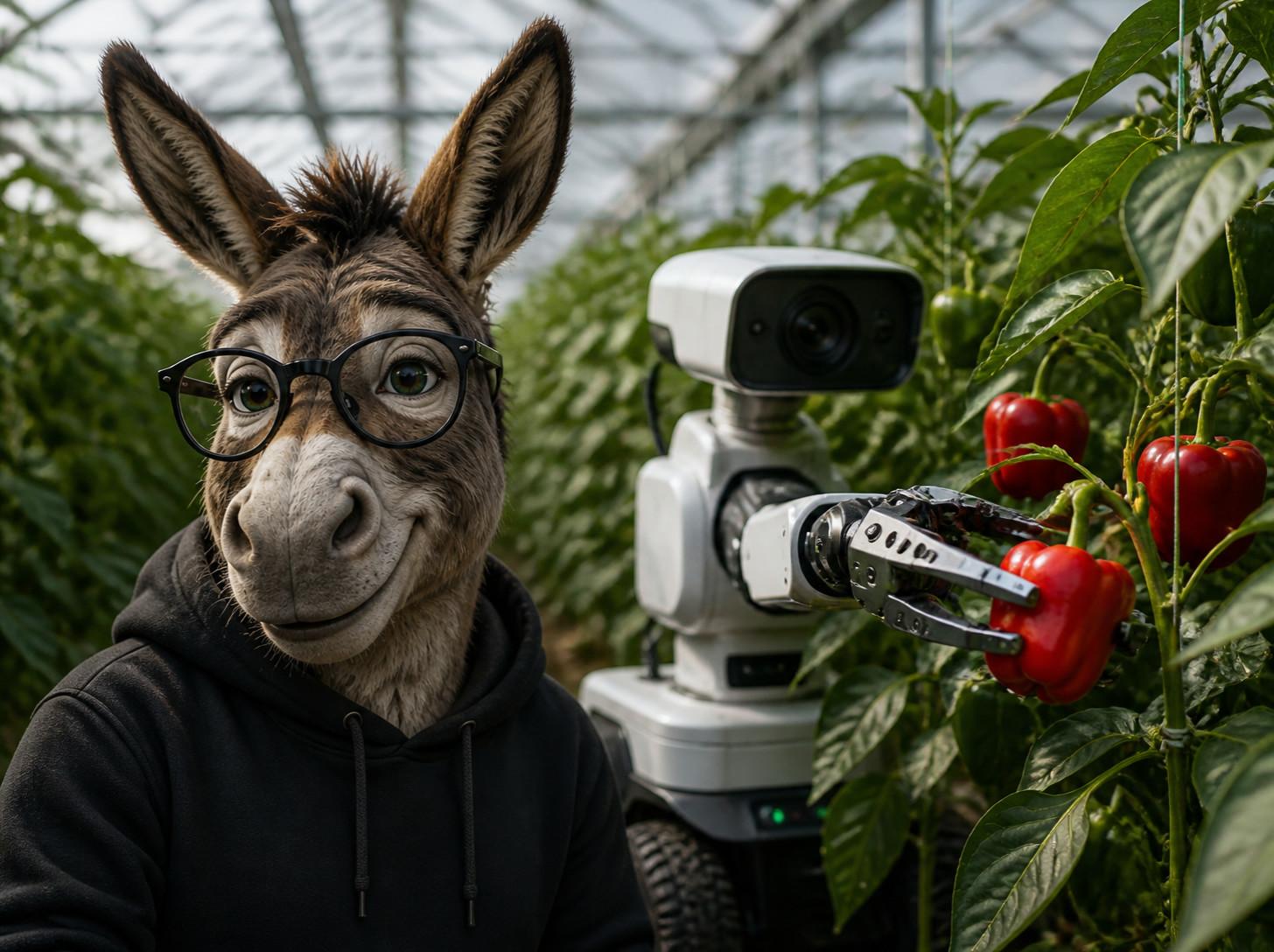 Harvest agentOnly ripe fruit, picked without damage.
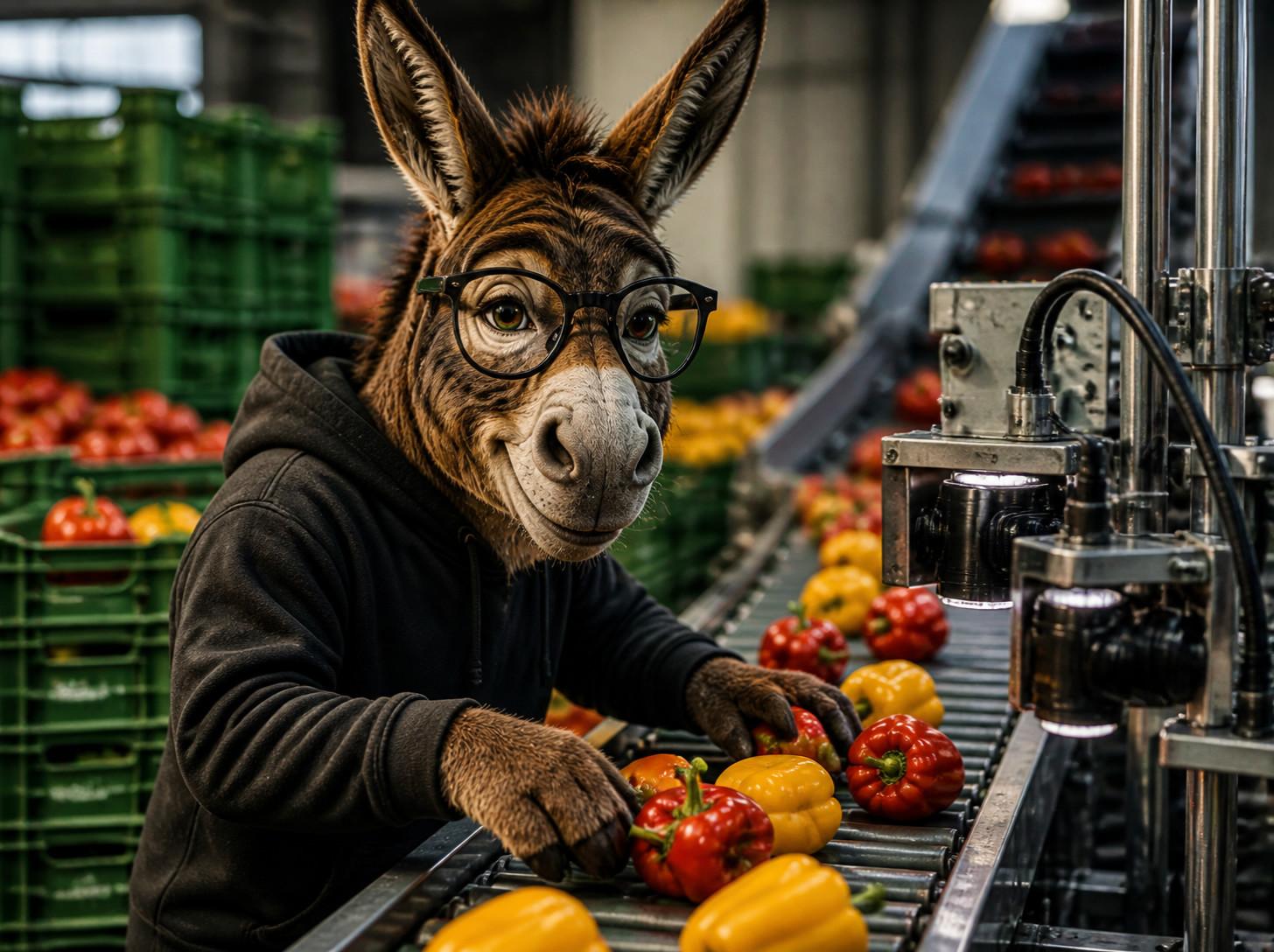 Quality agentEvery fruit in the right grade.
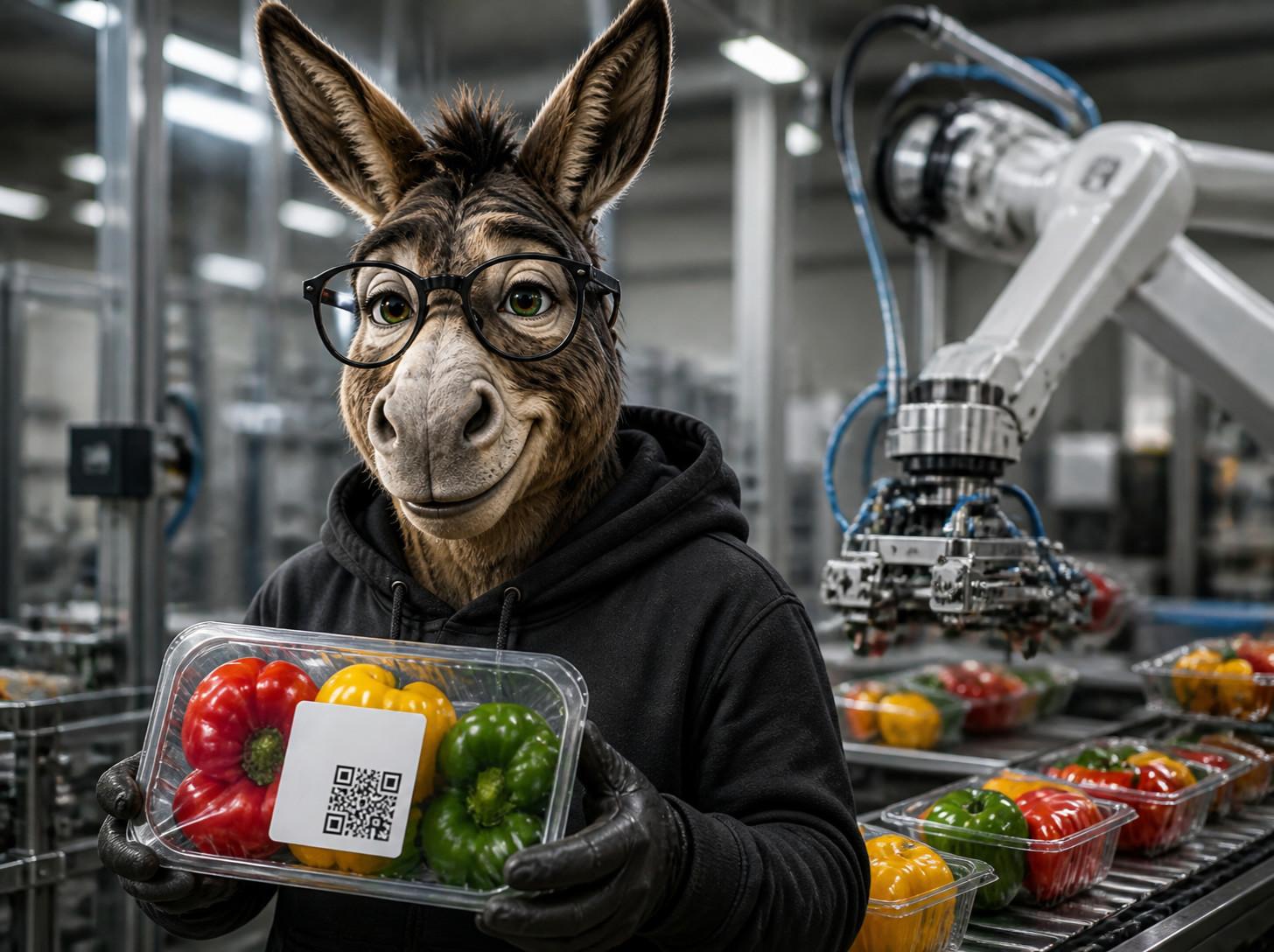 Packing agentCorrect, traceable packs, from greenhouse to shelf.
 Yield forecasting agentKnow how much you'll harvest, when, and at what cost.
Become a pilot farm
Free digital check-up: we look at systems, consumption and problems and tell you whether and where AgriAI can help.