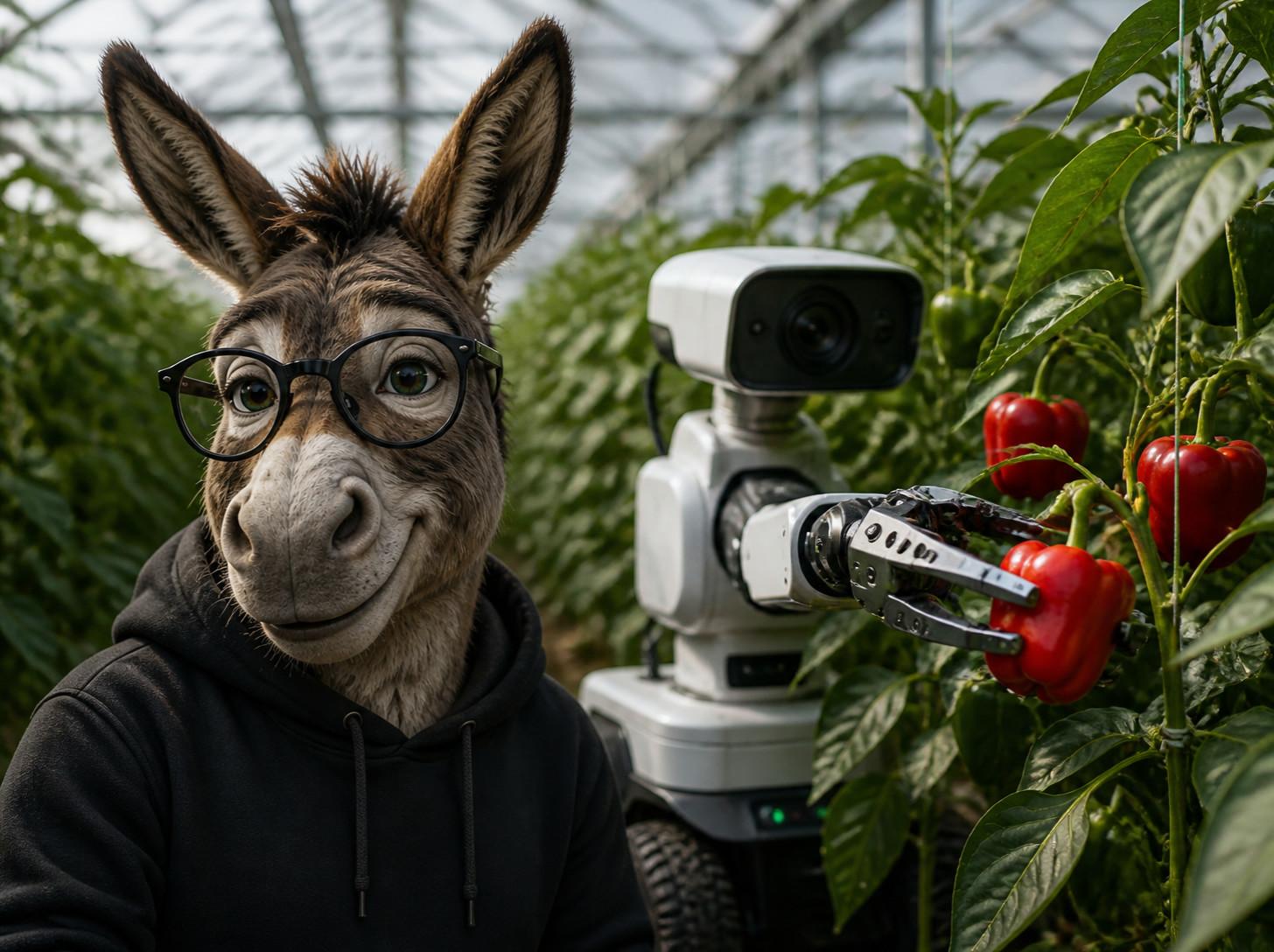
AI robotic harvesting: the AgriAI Harvest agent
The AgriAI Harvest agent recognises ripe fruit with computer vision, plans picking rounds and guides harvesting robots that don't damage the produce.
Harvest agent
Only ripe fruit, picked without damage.
What it does
- Recognises ripe fruit from images by colour and size
- Plans picking rounds by zone and day
- Guides robots that detach the fruit without bruising it
- Supports crews by pointing out ready rows and plants
- Weighs and logs the harvest by zone, in real time
- Passes data to Quality and to yield forecasting
How it works, step by step
Cameras count the fruit and estimate ripeness The agent draws up the day's picking plan by zone Robots and crews pick only the ready fruit Every crate is weighed and linked to its zone of origin
Agronomic deep dive
The science behind the agent
Harvesting well means picking at the right moment, without damage, and knowing exactly where each crate comes from. Harvesting is also the heaviest labour cost: that is why agricultural robotics focuses so much of its effort here.
When a pepper is ready
Pepper doesn't keep ripening significantly after picking: it must be harvested at the colour the market wants. The change from green to final colour takes weeks, and fruit left on the plant draws energy from younger fruit.
The agent estimates each fruit's ripeness from images and draws up the day's plan: which rows, how many fruits, how many work hours. The data are matched with the yield forecast.
Harvesting robots: results and limits
The review by Bac, van Henten, Hemming and Edan showed that for years harvesting robots struggled with speed and success rate. The EU SWEEPER project then developed a greenhouse sweet pepper robot: a real step forward, but still missing fruit and slower than a person.
The main difficulties are fruit hidden by leaves, variable light and stems to cut without injuring the plant. Kootstra and colleagues point the way: better vision, crops adapted to the robot and robots working alongside people.
After the cut: cooling and traceability
Pepper fears both heat and excessive cold: it keeps well around 7–10 °C with high humidity, while below that range it risks chilling injury. A crate left in the sun loses quality within hours.
Every crate is weighed and linked to zone and time of picking. The data serve three times: the forecast to learn, Quality to link defects to the greenhouse, Packing for traceability.
The parameters that matter
| Parameter | Reference | Why it matters |
|---|---|---|
| Colour at harvest | As required by the market | Pepper ripens little after picking |
| Storage temperature | About 7–10 °C | Below: chilling injury; above: water and quality loss |
| Storage humidity | High, about 90–95% | Prevents soft, shrivelled fruit |
| Time from cut to cooling | As short as possible | Quality is lost in the first hours |
Reference values from the agronomic literature for soilless greenhouse vegetables: always calibrate them to crop, variety, stage and local climate.
The sensors it uses
What each one measures, where it goes and the detail that makes the difference. “Core” is needed to start, “Extra” adds precision. See the full list for all agents
- Weather forecastCoreExpected temperature, radiation and rain over the coming daysAn online data service: nothing to installThey let you act ahead instead of chasing, for example heating less before a sunny day.
- Fixed or trolley-mounted camerasCoreImages of the plants to spot symptoms and count flowers and fruitsOn a trolley running on the heating pipes, or at fixed pointsImages taken from the same spot at the same time are the easiest to compare.
- Field photos and notes (smartphone)CoreObservations by the people working in the greenhouse: symptoms, fruit counts, crop stagesFrom the AgriAI app, during the greenhouse walkThe grower's eye is still the most valuable sensor: the app turns it into data.
- Harvest weighingCoreKilos picked per zone and per dayA scale in the greenhouse or warehouse, linked to the platformWithout real harvest data the forecast cannot learn.
- Depth camera (RGB-D)CoreColour image plus the distance of every point: 3D position of seedlings, fruit and stemsOn the robot arm or the trolleyWithout depth the robot knows there is a fruit, but not where to cut.
- Barcode and QR readersCoreThe code of crates, batches and packs at every stepAt line entry, packing and dispatchEach scan is a link in traceability: miss one and the chain breaks.
- Cold-store temperature and humidityCoreStorage conditions of harvested and packed produceIn the cold store and, with loggers, in transport vehiclesThe temperature log proves to the customer that the cold chain held.
- Gripper force sensorExtraHow much force the gripper applies to seedling or fruitIn the robot gripper's fingersKeeps the grip below the level that bruises fruit or crushes stems.
The most common mistakes
- Leaving ripe fruit on the plant too long
- Pulling the fruit instead of cutting the stem
- Crates in the sun or picking wet fruit
- Not knowing which zone each crate came from
Robots won't replace the crew tomorrow: today the agent makes the crew more precise, and prepares the ground for robots when they are ready.
Studies and sources
The scientific research and trade press we build on. Links go to the original sources.
Scientific research
- Harvesting Robots for High-value Crops: State-of-the-art Review and Challenges AheadJournal of Field Robotics, C. W. Bac, E. J. van Henten, J. Hemming, Y. Edan · 2014Review of thirty years of harvesting robots: results, limits and open challenges.
- Development of a sweet pepper harvesting robotJournal of Field Robotics, B. Arad et al. · 2020The EU SWEEPER robot for greenhouse sweet pepper harvesting, with trial results.
- Selective Harvesting Robotics: Current Research, Trends, and Future DirectionsCurrent Robotics Reports, G. Kootstra, X. Wang, P. M. Blok et al. · 2021Where robotic harvesting is heading: vision, manipulation and working with people.
Frequently asked questions
Are harvesting robots ready?
They are advancing fast but aren't widespread yet. The EU SWEEPER project developed a greenhouse sweet pepper robot; the review by Bac and colleagues explains the remaining challenges well.
And without robots?
The agent works with the crews: it says what to pick, where and how much, and logs the weights.
The other AgriAI agents
 Nursery agentHealthy, even seedlings, from seed to transplant.
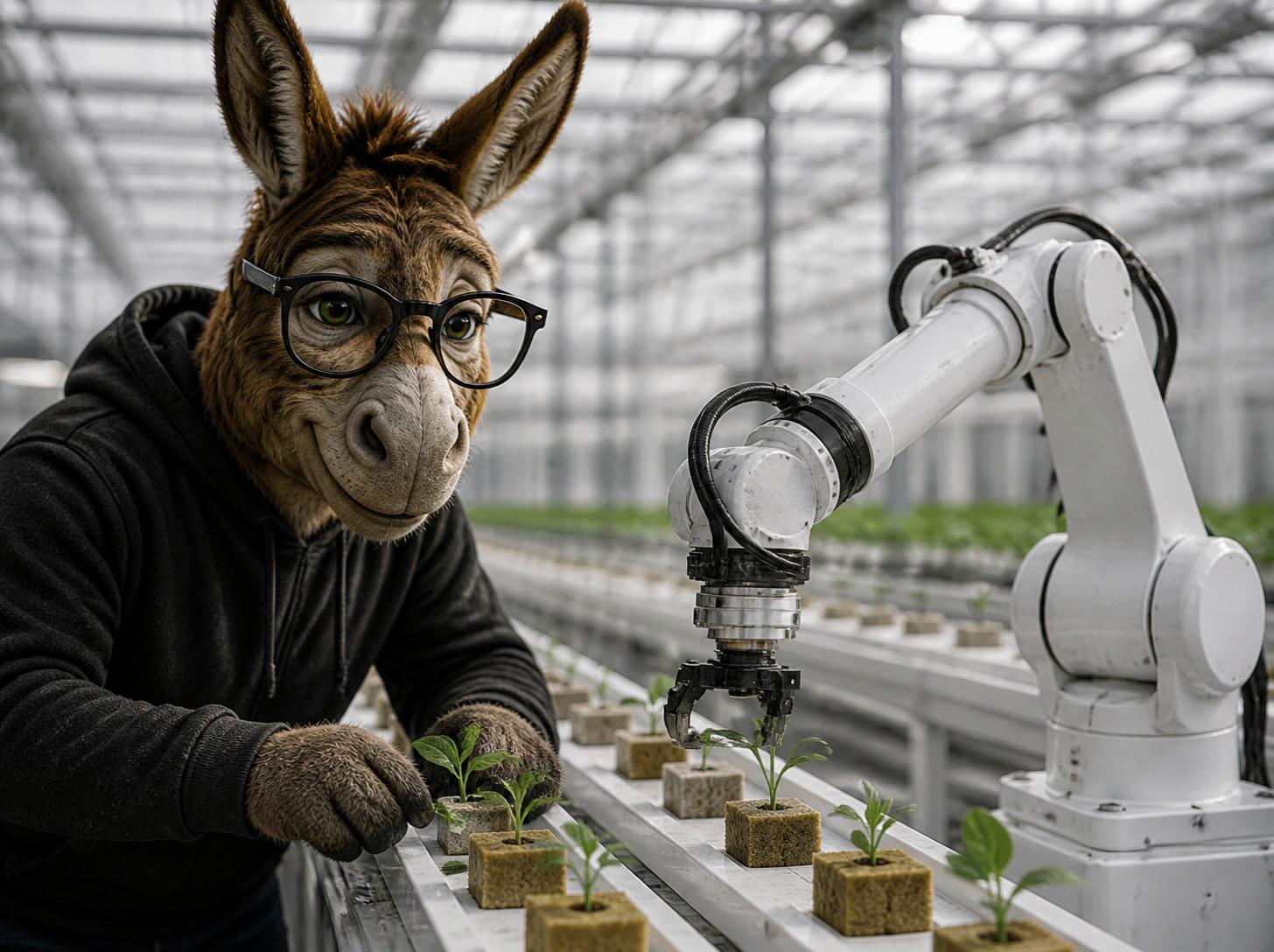 Transplant agentEvery seedling in the right place, at the right time.
 Fertigation agentThe right water and nutrients, at the right time.
 Climate agentThe greenhouse always in the ideal climate, with less energy.
 Crop protection agentSpots problems before they become damage.
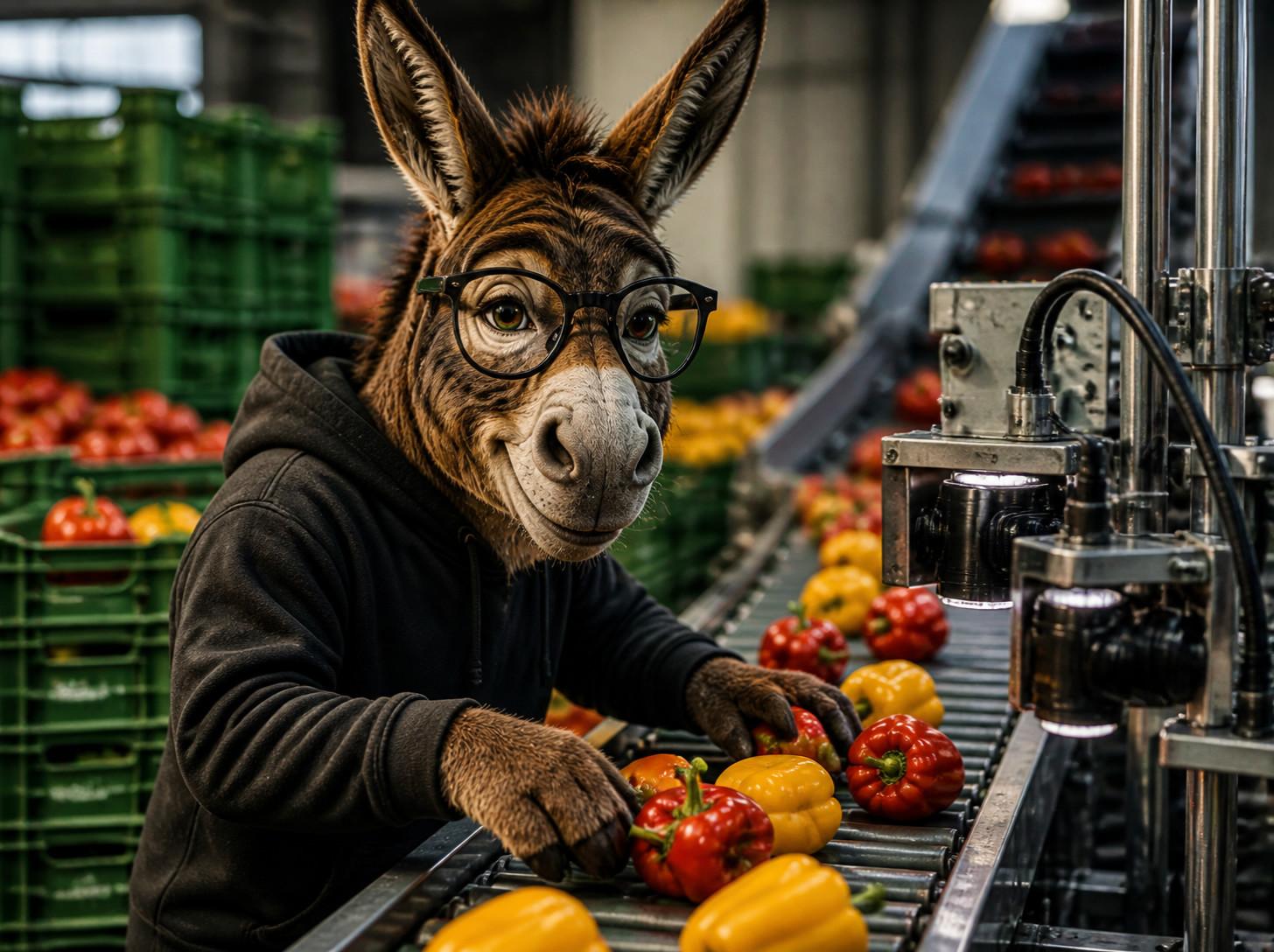 Quality agentEvery fruit in the right grade.
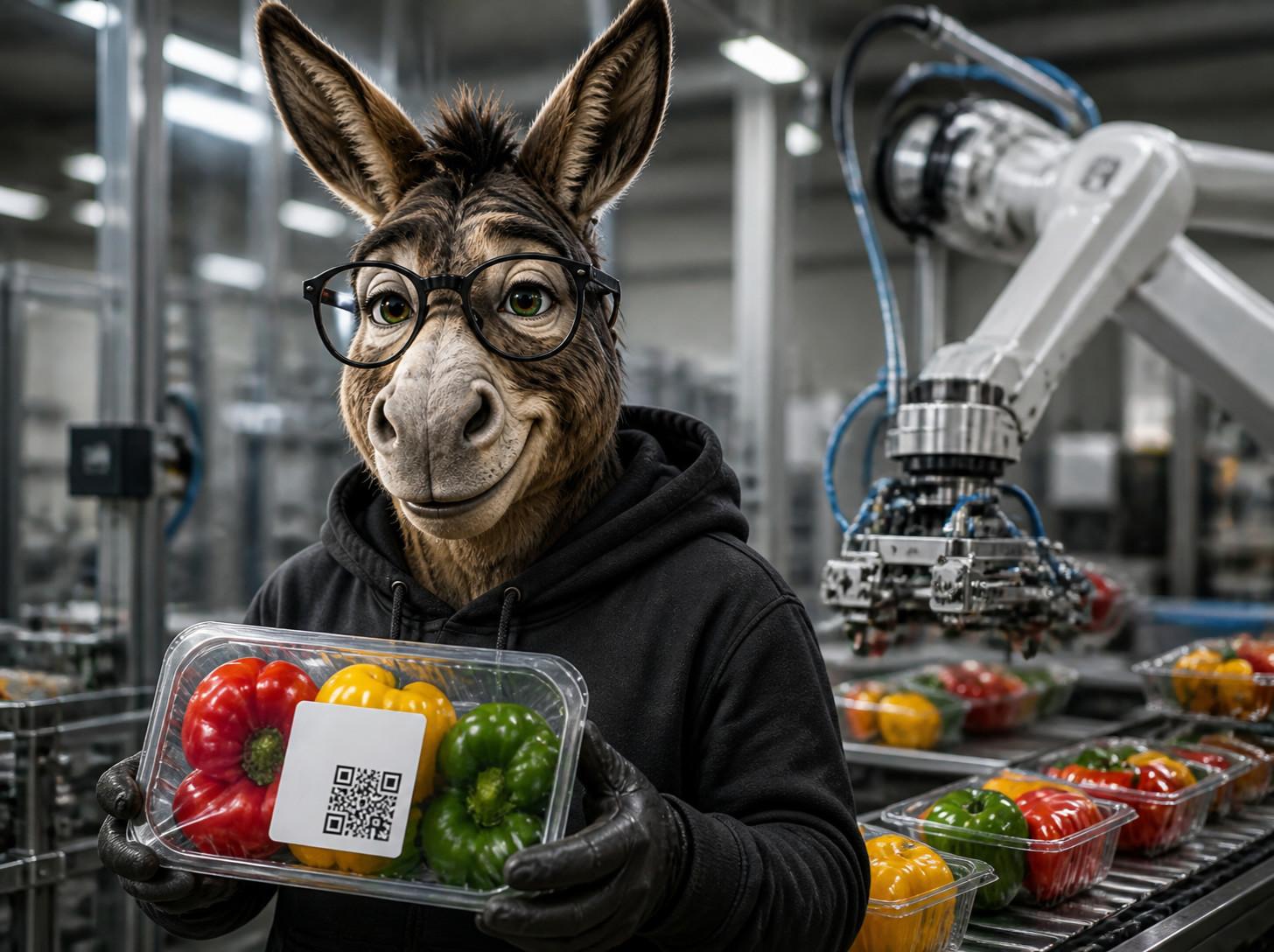 Packing agentCorrect, traceable packs, from greenhouse to shelf.
 Yield forecasting agentKnow how much you'll harvest, when, and at what cost.
Become a pilot farm
Free digital check-up: we look at systems, consumption and problems and tell you whether and where AgriAI can help.